


The Rainwater Solution
Why harvest rainwater?
Rainwater is of superior quality: zero hardness, sodium free, and nearly neutral pH. Harvesting rainwater can reduce demand on traditional water supplies and provide water in areas without access to a conventional water supply system. Plus, rainwater is free!
Saving Money and Resources
Lower bills: Using stored rain for lawns and chores cuts down on treated tap water use.
Drought backup: Provides an emergency reserve when local authorities limit tap water usage.
Off-grid living: Acts as a primary or essential water source in rural areas where municipal pipelines do not reach.
No added chemicals: Rain lacks the chlorine and fluoride found in treated tap water.
Naturally soft: Free of heavy minerals that can build up on fixtures and on pipes.
Less runoff: Capturing water stops heavy rain from rushing straight into storm drains, which helps prevent soil erosion and local street flooding.
How much rainwater?

As a general rule, for every inch of rain that falls on a 2,000-square-foot roof, about 1,000 gallons of water can be collected. In Austin, which receives approximately 32 inches of annual rainfall, that translates to 32,000 gallons of collectible water each year


1. Property Tax Exemption
The Texas Legislature allows the exemption of part or all of the assessed value of the property on which approved water conservation initiatives, such as rainwater harvesting, are made (Texas Tax Code §11.32). Individuals planning to install rainwater harvesting systems should check with their respective county appraisal districts for guidance on exemption from county property taxes.
2. 0% Sales Tax on Rainwater Collection Systems
In addition, the Texas Tax Code exempts rainwater harvesting equipment, supplies, and labor for the installation of rainwater harvesting systems from state sales tax (Texas Tax Code §151.355). To claim this exemption, present a Texas Sales and Use Tax Exemption Certificate (back of Form 01-339) to the supplier of the equipment at the time of purchase.
Find the form online at www.comptroller.texas.gov/forms/01-339.pdf.
3. Local Rebates
Some municipalities, local water providers, and counties also offer rebates and financial incentives to promote rainwater harvesting as part of their water conservation initiatives.
More Information and Contact For more information,
visit www.twdb.texas.gov/innovativewater/rainwater or contact staff at 512-463-8830 or RainWater-Harvesting@twdb.texas.gov.
Incentives.
FAQ
Your Questions, Answered
-
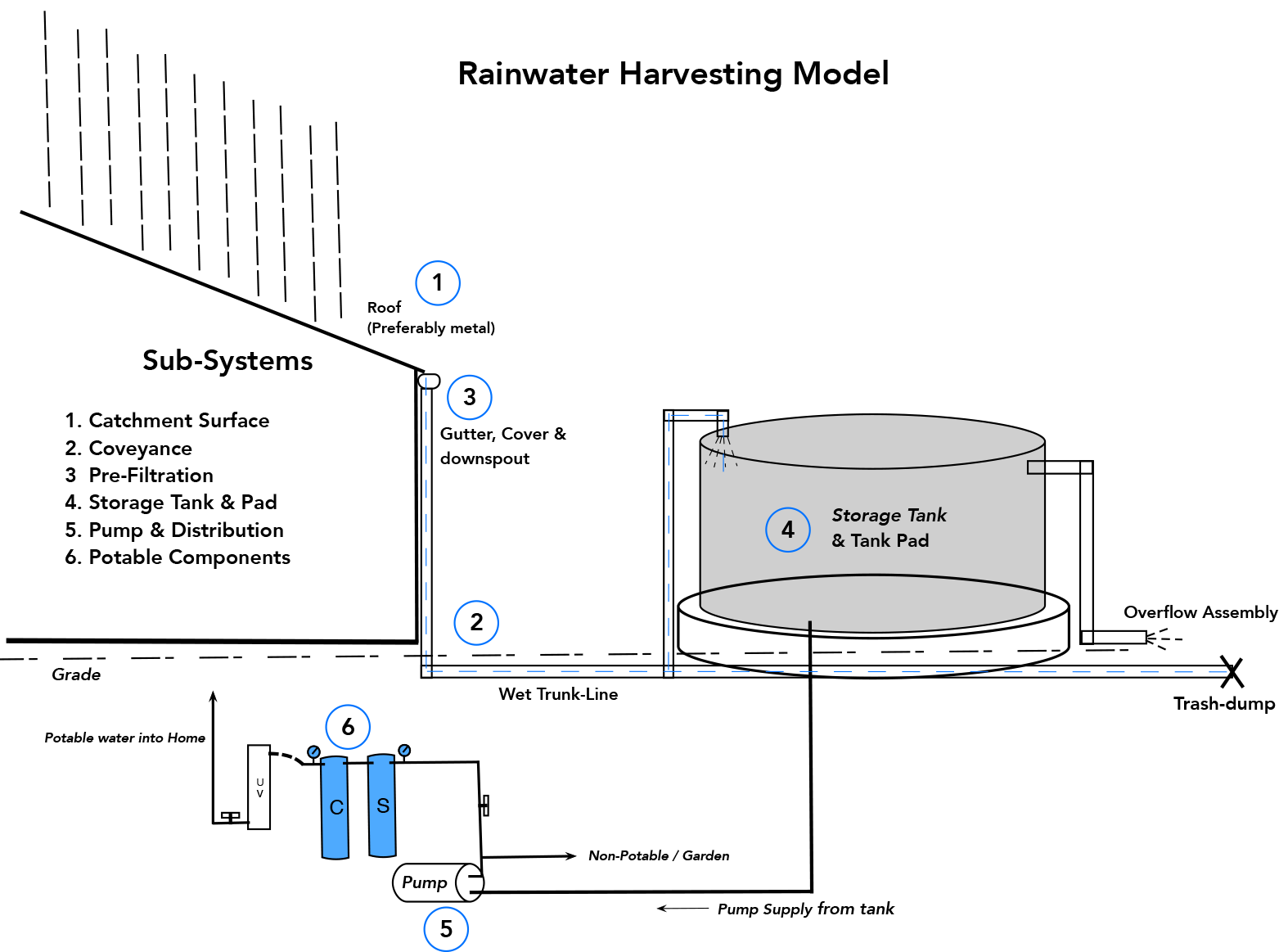
A rainwater harvesting system collects rain from your roof, filters it, stores it in a tank, and then pumps it through additional filtration and treatment before it is used throughout your home, landscape, or ranch.
-
Yes. When a system is properly designed, installed, and maintained with the appropriate filtration and disinfection, rainwater can provide clean, potable drinking water that meets high quality standards.
-
The amount depends on your roof size and annual rainfall. As a general rule, one inch of rain falling on a 2,000-square-foot roof can collect approximately 1,200 gallons of water.
-
Tank size depends on your water usage, roof area, local rainfall, and how long you want your water supply to last between rain events. A professional assessment can determine the ideal storage capacity.
-
Costs vary based on system size, tank capacity, filtration requirements, and installation complexity. Residential systems can range from several thousand dollars to larger custom installations for homes and ranches.
-
Yes. Many homeowners in Texas rely on rainwater as their primary water source. With proper storage capacity and system design, it can provide water for drinking, bathing, laundry, cooking, and other household uses year-round.
-
Routine maintenance includes cleaning gutters and leaf screens, inspecting filters, checking pumps, and replacing filter cartridges as recommended. Regular maintenance helps ensure reliable performance and excellent water quality.
-
Most systems are designed with backup options, such as municipal water or a well, to automatically supplement your supply during extended dry periods.
-
A professionally installed system can add value, particularly in areas where water availability is limited or water independence is a priority. Buyers often appreciate the long-term savings and sustainability benefits.
-
With quality components and regular maintenance, storage tanks can last several decades, while pumps, filtration equipment, and controls can provide many years of reliable service before requiring replacement.